November
 St John the Baptist, Hope Bagot.
SY8 3AF Parking at Village Hall. Church open.
Hope Bagot is a very special church. It is approached by steps which lead up into a beautiful hay meadow. The interior is ancient and peaceful, with Norman carving round the chancel arch, and a Norman font. The porch is 14th century.
There is a giant yew tree and a holy well.
Hope Bagot is one of the smallest parishes in Shropshire. Hung on the wall inside this small church is a remarkable Testimonial to one Benjamin Giles and his parents.
It reads: Near this Tablet lie the Remains of what was mortal of Benjamin Giles Jun Esq Aged 31.
Who on the 12th day of March in the year 1795 in the Prime of life and in the Vigour of Health was (in  consequence of a Fall from His Horse) snatched suddenly away from his disconsolate Parents and from an extensive Circle of afflicted Friends by the irresistible summons of the King of Terrors*.
Reader. Contemplate the fate of this amiable but unfortunate young man and Let Him that thinketh He standeth take heed lest He fall.
Also near the same spot is deposited the Body of Jemima (Mother of said BENJAMIN) Giles. She departed this life on the 21st day of May in the Year 1801 Aged 70
If genuine Piety active Benevolence and true Christian Charity, be a passport to the Land of Rest and Immortality, Her surviving Friends may humbly hope, that She has obtained an Asylum in that blessed Country where only true Joys are to be found.
Also In the same Grave is laid the body of BENJAMIN GILES Esq (Consort of the above JEMIMA) He died on the 31st day of October in the Year 1801Aged 71. Universally beloved esteemed and lamented by all who knew Him.
Integer Vilce scelerisque purus**
The chief object of His life was to inculcate both by Precept and Example the favourite Maxim that governed His conduct, that An Honest Man’s the noblest work of God
 *The phrase "king of terrors" is a reference to death. Bildad's speech in Job 18 is a vivid description of the fate of a wealthy evildoer.
**upright of life and free from vice
Photos and text,
Andrew Edwards, Anne Pilsbury,
Top photo from 'A Church near You'
October
St Peter, Cound
On the front door of the church is a medieval sanctuary knocker. Anyone fleeing from justice could obtain temporary sanctuary in the church by striking the knocker. This gave both the pursuer and the pursued time to reflect and maybe come to an amicable solution. In medieval England, a church door could mean the difference between life and death.
If a fugitive reached the church and touched the sanctuary knocker, they could claim the Church's protection.
Even the king's officers had to respect this right.
The most famous surviving example is the magnificent bronze knocker on the north door of Durham Cathedral, dating from around AD 1100.
Sanctuary wasn't a way to escape justice forever.
 St Peter's is in a pleasant rural location, having been built over a period of 600 years. The rather squat tower is clearly of at least two different dates.
There is a wonderful medieval door. 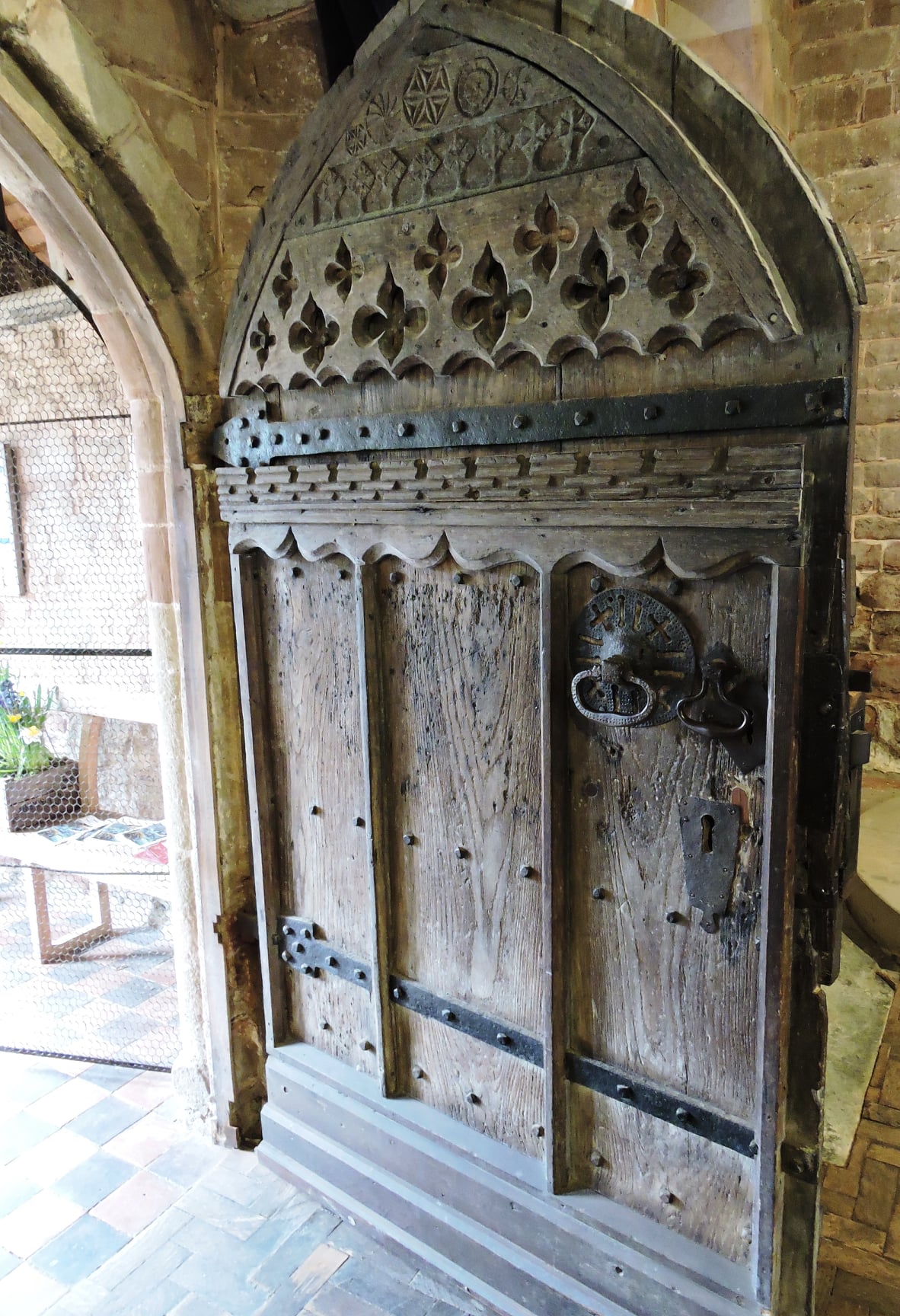
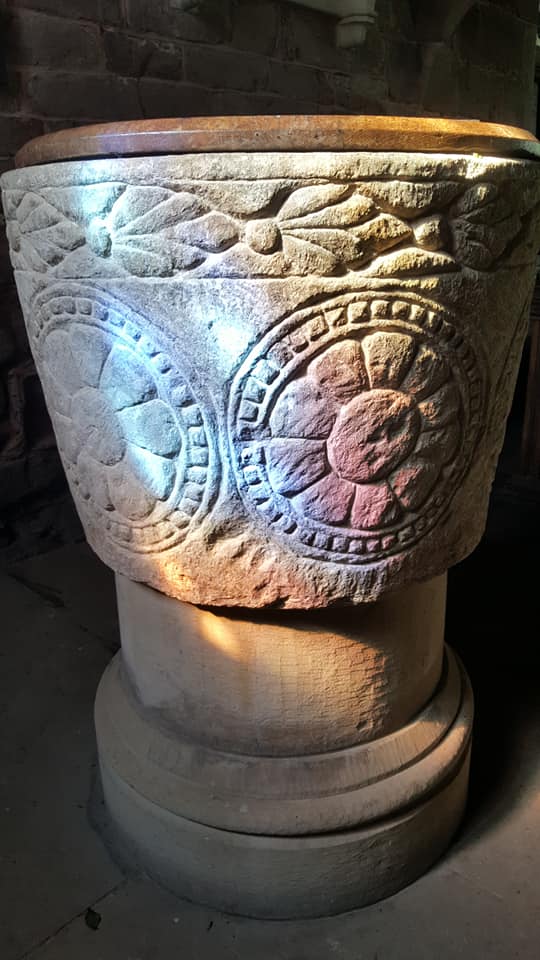
The lovely font with its rosettes is from about 1150AD.
There are fragments of a doom painting, the only one in Shropshire.
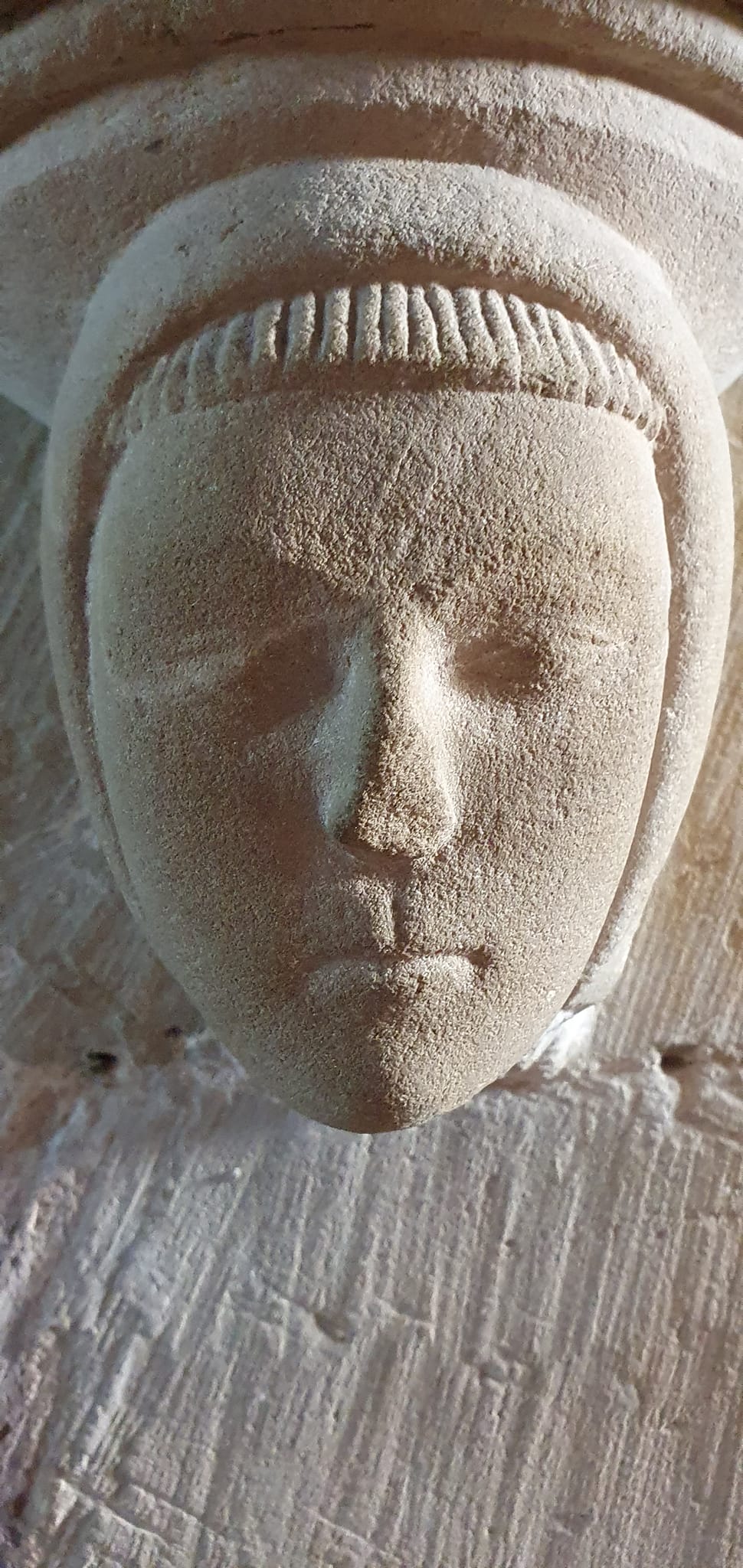
A mysterious head on the south wall.
A lovely and interesting church, well worth a visit.